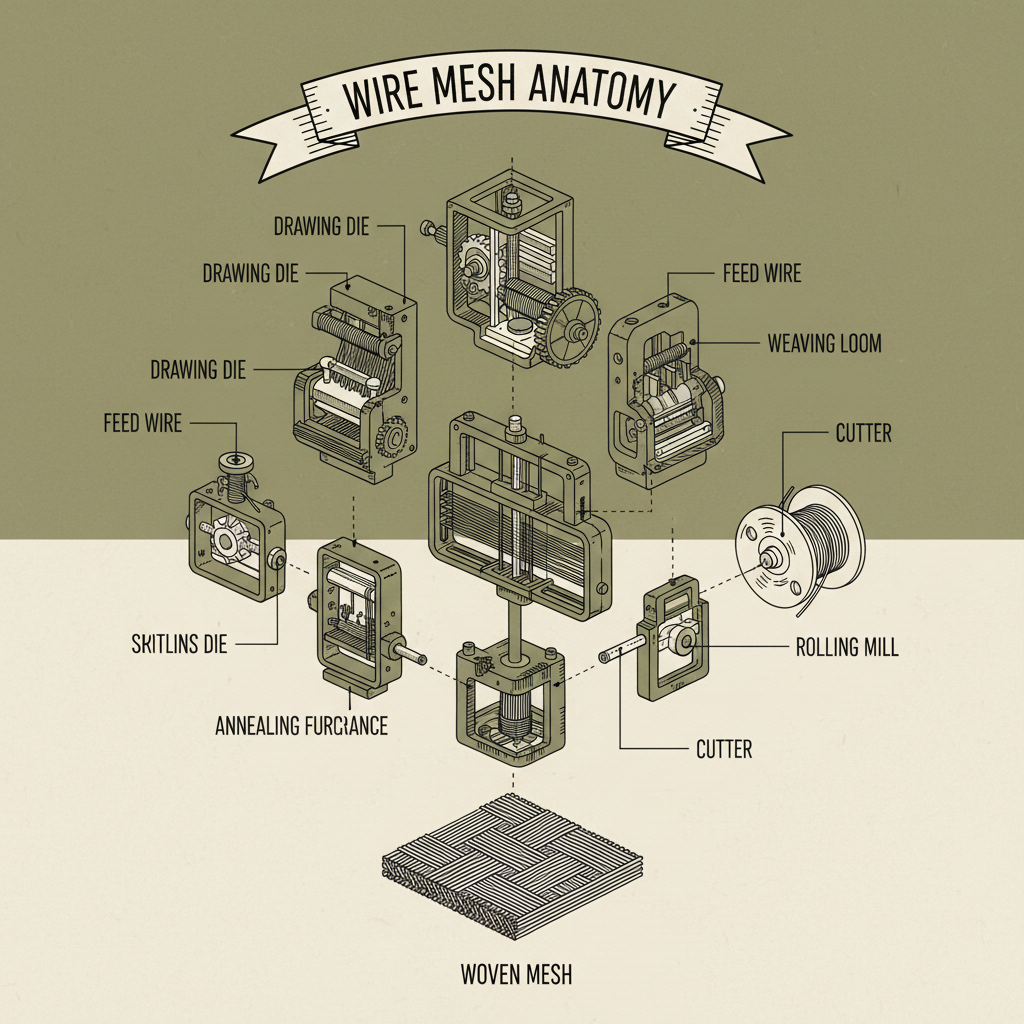
To be honest, the wire mesh game in China... it’s changed a lot. Used to be, you just needed a basic crimping tool and a willingness to haggle. Now? It’s all about customization, specialized alloys, and these fancy automated weaving machines. I’ve been on sites where they’re importing stuff directly from Germany, but, frankly, a lot of it ends up being overkill. Plus, the lead times are crazy. The demand is up, especially with all the infrastructure projects popping up, but finding manufacturers who can deliver consistent quality… that's the real trick.
Have you noticed the shift towards high-tensile steel mesh? It’s everywhere now. Used to be all about galvanized iron, which is still decent, but not for heavy-duty applications. It smells...well, like metal, obviously, but you can tell the difference in the steel. High-tensile feels denser, almost heavier in the hand. You get a whiff of the oil they use in the drawing process, too. Not pleasant, but it means they’re lubricating properly. Anyway, I think the biggest issue right now isn't making the mesh, it’s the consistency of the coatings.
The Current Landscape of wire mesh manufacturers in china
It's booming, honestly. wire mesh manufacturers in china are everywhere. But a lot of them are just re-sellers. Finding the actual factories that can guarantee consistent weld strength and coating thickness... that’s a challenge. The government's pushing for higher standards, and thankfully, they are. I saw a report from the ISO last year showing a significant uptick in quality control certifications amongst the larger manufacturers. Still, you gotta watch out for the smaller outfits cutting corners. They'll use cheaper wire, thinner coatings... it looks okay at first, but it won’t last.
The whole supply chain is getting squeezed. Raw material costs are going up, labor is getting more expensive, and everyone wants faster turnaround times. It’s a mess.
Common Design Pitfalls in Wire Mesh Manufacturing
Strangely enough, a lot of engineers don't think about the handling of the mesh. They design something on paper that looks beautiful, but then the workers on site can’t actually manipulate it easily. Like, they'll spec a super fine mesh for a retaining wall, but it just bends and buckles when you try to get it into position. I encountered this at a construction site in Shanghai last time. Complete waste of material.
Another thing is aperture size. Too small, and it clogs with debris. Too big, and whatever you're trying to contain falls through. It’s a balancing act. And the weld points… those are crucial. If the welds are weak, the whole thing falls apart. Simple as that.
And don't even get me started on edge finishing. Sharp edges are a nightmare for workers. You need to have a properly rolled or folded edge. Safety first, always.
Materials Used in High-Quality Wire Mesh
The core material, of course, is steel. But it’s not just any steel. You’ve got low-carbon steel, high-carbon steel, stainless steel (304, 316… the numbers matter!), galvanized steel… each with its own properties and applications. 316 stainless is the gold standard for corrosion resistance, but it's expensive. Galvanized is good enough for most things, but it will eventually rust, especially in harsh environments.
I've started seeing more and more manufacturers using powder coatings. It’s a good way to add an extra layer of protection against corrosion and UV damage. The feel is different, though. It’s smoother, less… gritty than galvanized. They're starting to experiment with different polymer coatings, too, for specific applications.
And then there’s PVC coating, which is cheap and cheerful, but not very durable. It gets brittle in cold weather and cracks easily. It’s fine for temporary fencing, but not for anything long-term.
Real-World Testing and Quality Control
Forget the lab tests. They’re useful, but they don't tell you how the mesh will actually perform on a construction site. I always tell the engineers: “Get your boots dirty.” Real testing involves bending the mesh, stretching it, hammering it… seeing how it holds up to abuse. We do pull tests, of course, to check the weld strength, but that’s just one piece of the puzzle.
One test I like to do is the “drop test.” You simply drop a weight onto a section of mesh from a certain height and see if it breaks. Sounds crude, but it’s surprisingly effective. It simulates the kind of impact the mesh might experience during handling and installation.
Wire Mesh Performance Ratings from On-Site Testing
How Wire Mesh is Actually Used on Site
It’s never quite how the drawings show it, believe me. They’ll spec it for a clean, straight installation, but then you get to the site and everything’s out of alignment. You end up bending and cutting the mesh to make it fit, which compromises its integrity. That’s why having workers who know what they’re doing is so important.
I’ve seen mesh used for everything from reinforcing concrete to creating temporary barriers to protecting sensitive equipment. Sometimes, they even use it to make makeshift strainers for the tea break! Seriously. The guys are resourceful.
Advantages and Disadvantages of Different Mesh Types
High-tensile steel mesh? Strong, durable, relatively affordable. But it’s a pain to work with. It springs back at you, and it's hard to cut cleanly. Stainless steel? Corrosion-resistant, looks good, but expensive and can be difficult to weld. Galvanized? The workhorse of the industry. Good enough for most applications, but it rusts eventually. PVC coated? Cheap and cheerful, but brittle. Anyway, I think you have to weigh the pros and cons based on the specific application. There's no one-size-fits-all solution.
Later... Forget it, I won’t mention it.
Customization Options and Applications
Customization is huge right now. Everyone wants something tailored to their specific needs. Last month, that small boss in Shenzhen who makes smart home devices insisted on changing the interface to Type-C for his device's shielding mesh. The result was a three-week delay and a significantly higher cost because it meant retooling the entire production line. He swore it was essential for “future-proofing,” but I think he just wanted to be different.
You can customize everything: aperture size, wire diameter, coating type, even the shape of the mesh. We did one project where we had to create a curved mesh panel for a sculpture. That was a headache. But we got it done. It's all about problem-solving, really.
And the applications are endless. Reinforcing concrete, security fencing, animal enclosures, filtration systems… you name it, someone’s using wire mesh for it.
Overview of Customization Options for wire mesh manufacturers in china
| Customization Type |
Complexity (1-5) |
Cost Impact (Low, Med, High) |
Lead Time (Days) |
| Aperture Size Adjustment |
2 |
Low |
3 |
| Wire Diameter Modification |
3 |
Med |
7 |
| Coating Type Change |
3 |
Med |
5 |
| Custom Shape Fabrication |
5 |
High |
14 |
| Material Grade Upgrade |
4 |
Med |
10 |
| Edge Finishing Options |
2 |
Low |
2 |
FAQS
For a retaining wall, you generally want something with high tensile strength and good corrosion resistance. High-tensile steel mesh, especially with a galvanized or epoxy coating, is a solid choice. Avoid PVC-coated mesh, as it’s not durable enough for that kind of application. The key is proper gauge and aperture size to handle the soil pressure.
That depends on the environment. In a dry climate, it can last 15-20 years. In a coastal environment with salt spray, it might only last 5-10. Regular inspection and maintenance, like applying a protective coating, can extend its lifespan. But eventually, it will rust.
316 stainless steel contains molybdenum, which makes it significantly more resistant to corrosion, especially chloride corrosion. That’s why it’s preferred for marine applications or environments with high salt content. 304 is cheaper but less durable in harsh conditions.
It depends on what you're trying to contain or filter. Smaller apertures provide better containment but can clog more easily. Larger apertures allow for better airflow or drainage but might let things fall through. Consider the size and shape of the particles you’re dealing with.
Yes, absolutely. Steel is highly recyclable. Scraps from manufacturing and end-of-life mesh can be melted down and reused. It's a good practice and helps reduce waste. But getting it to the recycling facility can be a challenge, depending on your location.
Always wear gloves to protect your hands from sharp edges. Eye protection is essential, especially when cutting mesh. And wear a dust mask, particularly when handling galvanized mesh, as the zinc fumes can be harmful. Proper handling techniques are key to avoiding injuries.
Conclusion
Ultimately, wire mesh is a deceptively simple product. It’s not glamorous, but it’s essential for a huge range of applications. From reinforcing concrete to securing buildings, it’s the unsung hero of construction. And finding reliable wire mesh manufacturers in china who prioritize quality and consistency is more important than ever.
Whether this thing works or not, the worker will know the moment he tightens the screw. That’s all that really matters, isn't it? And if he's cursing under his breath because the mesh is flimsy or hard to work with, then someone's done something wrong.





.png "E-mail")